
Certified Heart Diamonds — Antwerp
The ultimate symbol of love — brilliant sparkle in the most romantic diamond shape ever created.
56-59
FACETS
#10
Most Popular
1950
Perfected
Our Current Stock
Heart Shaped Diamonds
Hand-picked certified heart shaped diamonds from our current stock — at prices up to 75% below retail.
Expert Advice
Why Choose a Certified Heart Shaped Diamond?
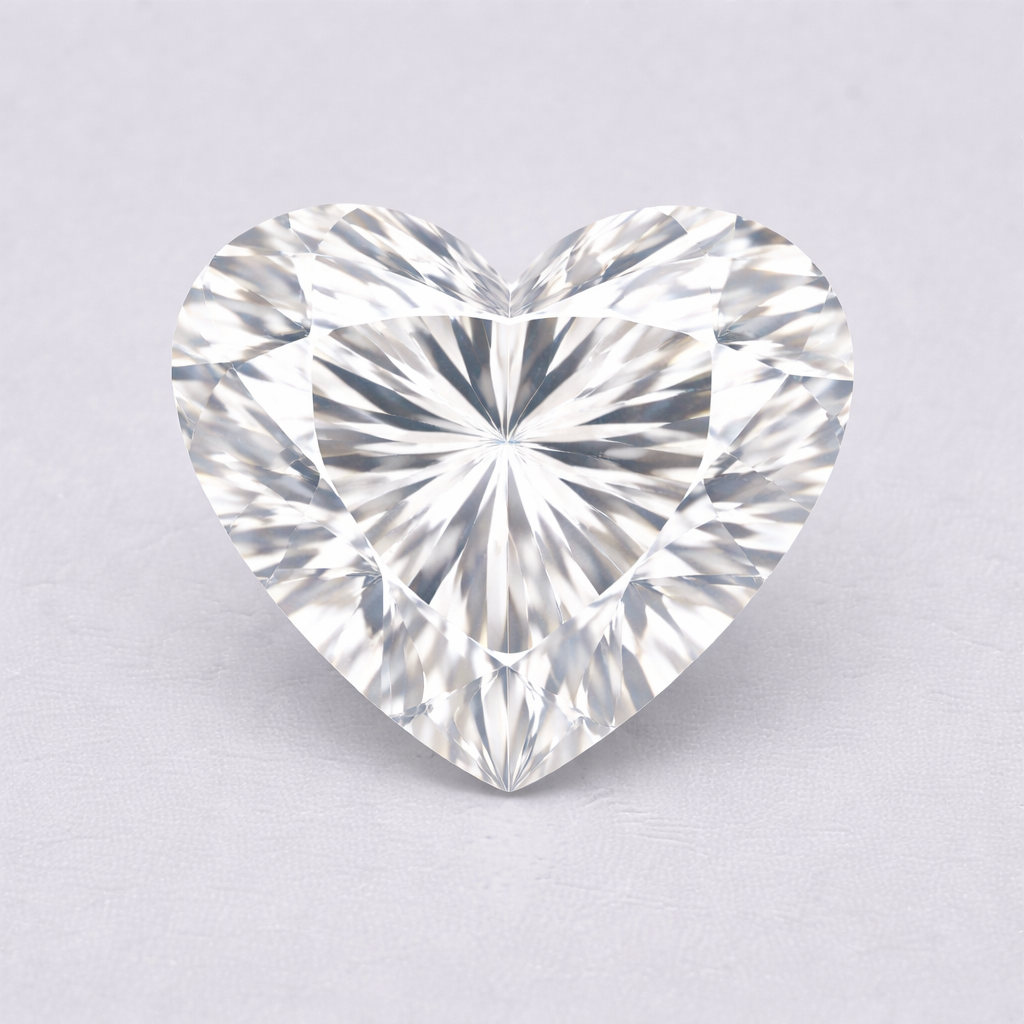
The heart shaped diamond is the most emotionally charged and personally expressive choice in fine jewellery. A modified brilliant cut derived from the pear shape, the heart diamond requires exceptional skill to cut — achieving perfect bilateral symmetry, a clearly defined cleft and balanced lobes demands a level of craftsmanship that not all cutters can deliver. The reward is a stone of unmistakable meaning: a diamond that says something no other shape can.
Meaning
The Most Personal Diamond Shape
No diamond shape carries meaning the way a heart does. Choosing a heart diamond is not a style decision — it is a personal statement. Whether in an engagement ring, a pendant, or a gift between loved ones, the heart shaped diamond communicates something direct and unambiguous that no other shape in fine jewellery can replicate.
Brilliance
Full Brilliant-Cut Sparkle
The heart is a modified brilliant cut, using a facet arrangement derived from the round and pear shapes. It produces genuine fire and scintillation — not the quiet reflections of a step cut, but active, multi-directional sparkle that rewards movement and light. A well-cut heart diamond blazes from across a room.
Rarity
A Shape That Demands Master Craftsmanship
The heart is the most technically demanding diamond shape to cut well. Perfect symmetry between the two lobes, a well-defined cleft and balanced shoulders require a level of skill that fewer cutters achieve. This is why truly exceptional heart diamonds are rarer than comparable rounds or ovals — and why working with a specialist who can identify a well-cut stone matters.
Value
Excellent Value Per Carat
Heart shaped diamonds typically cost 15–25% less than a comparable round brilliant of the same carat weight. Lower demand relative to round, oval and cushion shapes means you can acquire a genuinely exceptional, emotionally significant diamond at meaningfully lower prices — without compromising on brilliance or quality.
Impact
Maximum Visual Impact Per Carat
The heart's distinctive outline makes it immediately recognisable at any size — but it truly comes into its own at 0.70ct and above, where the lobes, cleft and point all read clearly. At 1.00ct and above, the heart shaped diamond makes a visual impact that no other shape can match for sheer romantic drama.
Gifting
The Ultimate Diamond Gift
Beyond engagement rings, the heart shaped diamond is the definitive diamond gift — for anniversaries, milestone birthdays and occasions that call for something more than beautiful. In a pendant setting, the heart is particularly striking: suspended from a fine chain, it moves and catches light with every breath.
Expert Advice
Your Guide to Heart Shaped Diamonds
Setting recommendations for certified heart shaped diamonds
The heart's single pointed tip — at the bottom of the stone — is its only vulnerable point, and requires a V-prong to protect it. This is non-negotiable for an engagement ring worn daily: without a V-prong at the tip, the point can chip if struck at the right angle. A 3-prong setting — one V-prong at the tip and two prongs at the upper lobes — is the most common heart setting, showing off the outline clearly while providing complete protection.
A 5-prong setting offers additional security and a more cushioned appearance. Bezel settings protect the tip entirely but obscure the pointed bottom — trading security for a softer, rounder look. For pendants, a simple bail at the top (cleft) of the heart is the classic setting: the stone hangs with its point downward, creating the classic heart silhouette in motion. Halo settings amplify the heart's face-up size dramatically and are particularly popular for engagement rings.
What to expect to pay for certified heart shaped diamonds
Heart shaped diamonds offer strong value relative to rounds. As a general guide at G colour and VS2 clarity: approximately €700–€1,100 for a 0.50ct stone, €1,350–€2,200 for a 1.00ct, €2,400–€4,000 for a 1.50ct, and €5,200–€8,500 for a 2.00ct.
Note that for heart diamonds, we recommend 0.70ct as a practical minimum — below this, the heart outline becomes difficult to read clearly. At Diamantwerp, our prices are typically 75% below what you would pay at a traditional jeweller for the same certified stone.
Heart Shaped Diamonds in Antwerp
Antwerp is the world's diamond capital — over 80% of the world's rough diamonds pass through the city's diamond district each year. Buying certified natural diamonds in Antwerp means purchasing direct from the source, with none of the retail markups added by high-street jewellers or international online platforms.
At Diamantwerp, our office on Pelikaanstraat 62 sits at the heart of the Antwerp diamond district, allowing us to source heart shaped diamonds directly from cutters and sight-holders and pass the savings to you.
Heart Shaped Diamonds and certification
Unlike round brilliants — which can achieve a Triple Excellent cut grade from GIA — heart shaped diamonds receive no standardised cut grade. GIA grades heart diamonds on polish and symmetry only. For a heart, symmetry is the single most important quality indicator: any imbalance between the two lobes, or a cleft that is too shallow or too deep, is immediately visible and fundamentally compromises the shape's appeal.
When assessing a certified heart diamond, always view the stone face-up — preferably in high-quality video — to verify lobe symmetry, cleft depth and shoulder balance. Check the length-to-width ratio (ideally 0.90–1.10 for a classic heart outline) and ensure the certificate shows Good or Excellent symmetry. Every heart shaped diamond at Diamantwerp comes with a verified certificate from GIA, HRD or IGI — and our team assesses symmetry carefully before adding any heart to our inventory.
Four things to understand before you purchase a certified heart shaped diamond — from the minimum carat weight needed for the heart outline to read clearly, to the critical importance of symmetry, to realistic pricing, and what makes Antwerp the smartest place to buy.
Explore More
Other Diamond Shapes
Not sure if this shape suits you? Discover our complete range of different diamond shapes.
-

Round
Timeless ClassicThe classic choice with maximum brilliance. 58 facets engineered for unmatched sparkle and fire.
View Round Diamonds -

Oval
TrendingElongated brilliance that flatters the finger. Appears larger than a round of equal carat weight.
View Oval Diamonds -

Cushion
Vintage RomanceSoft rounded corners with a pillow-like shape. Broad facets showcase mesmerising light play.
View Cushion Diamonds -

Princess
Modern ClassicA square silhouette with brilliant-style faceting. Sharp corners and contemporary sparkle.
View Princess Diamonds -

Pear
DistinctiveA teardrop silhouette combining the round's brilliance with the marquise's elongation.
View Pear Diamonds -

Marquise
Regal HeritageA regal boat-shape favoured since 1745. Elongates the finger and maximises visual size per carat.
View Marquise Diamonds -

Emerald
Art DecoStep-cut facets create a hall-of-mirrors effect. Prized for its understated, architectural elegance.
View Emerald Diamonds -

Asscher
Vintage GlamourA square step-cut with deeper facets than an emerald. Signature "hall of windows" effect with Gatsby-era charm.
View Asscher Diamonds -

Radiant
Bold BrillianceA rectangular silhouette with brilliant-cut sparkle. Created in 1977 for modern fire in a classic shape.
View Radiant Diamonds
Diamond education
How to Choose Your Perfect Diamond
Selecting a certified loose diamond is a personal journey. Every stone is unique, and the right choice depends on a balance of the four fundamental quality factors — known as the 4 C's of diamond
Use our search tool above to filter by cut, colour, clarity and carat weight. Compare certificates, review 360° imagery, and find the stone that matches your taste and budget. Not sure where to start? Our experts are here to help.

Client Experiences
What Our Clients Say
Real experiences from clients who purchased certified loose diamonds through Diamantwerp.
Diamantwerp
Out of 5 stars
Overall rating out of 11 Google reviews


Despite some issues with delivery on your side, the product I ordered exceeded my expectations. The quality is at a high level, so overall I am satisfied with the purchase.

Great experience from start to finish. Communication was clear and professional, and the diamond matched the description perfectly. Very satisfied with the quality and overall service. Highly recommended!

Perfecte service, betrouwbaar en Top kwaliteit 👍

Zeer tevreden, hetgeen gevraagd is werd ook uitgevoerd….. top!!!!

Wij hebben onze trouwringen hier besteld en zijn ontzettend tevreden. Vanaf het eerste moment werden we heel vriendelijk en professioneel geholpen. Er werd echt de tijd genomen om naar onze wensen te luisteren en mee te denken over het ontwerp. De service was perfect: duidelijke uitleg, eerlijk advies en een fijne, persoonlijke benadering. We voelden ons echt welkom en begrepen. Het eindresultaat is prachtig geworden. We zijn er enorm blij mee en dragen ze met trots. Absoluut een aanrader voor iedereen die op zoek is naar kwaliteit, vakmanschap en uitstekende service!

Verschillende groottes van parels tentoongesteld, waardoor ik kon kiezen welke perfect bij mij passen. Goede service en top kwaliteit!


Zeer tevreden van mijn trouwring. Exact het design waar ik naar verlangde, kwaliteitsvolle uitvoering en een fijne service.

We kopen hier ondertussen al meerdere jaren onze edelstenen in alle vertrouwen en transparantie. Telkens de overeengekomen kwaliteit aan de best mogelijke prijs, een tevreden klant hier.

Heel professionele en betrouwbare service. Duidelijke uitleg, zonder druk om te beslissen. Alles verliep vlot en correct - zeker een aanrader!
Common Questions
Certified Heart Shaped Diamonds FAQ
Everything you need to know about buying a certified heart shaped diamond.
What carat weight do I need for the heart shape to be visible?
We recommend a minimum of 0.70ct for the heart outline to read clearly in a ring setting. Below 0.70ct, the lobes and cleft can appear indistinct, particularly when viewed from a normal distance. For a pendant setting, 0.50ct is workable — the heart hangs and moves independently, making the outline easier to read than in a ring. For maximum romantic impact in an engagement ring, 1.00ct or above is the most popular choice.
How important is symmetry in a heart diamond?
Symmetry is the single most critical quality factor in a heart shaped diamond — more important than in any other shape. The two lobes must be perfectly equal in size and curvature, the cleft must be well-defined and centred, and the shoulders must be balanced. Any asymmetry is immediately visible and fundamentally undermines the shape's appeal. Always view a heart diamond face-up in video before purchasing — still photography, particularly from overhead, can hide lobe imbalances. Check that the GIA, HRD or IGI certificate shows "Good" or "Excellent" symmetry.
What is the best length-to-width ratio for a heart?
For a classic, balanced heart outline, aim for a length-to-width ratio between 0.90 and 1.10. A ratio of 1.00 produces a perfectly equal heart — the most traditional and widely preferred proportion. Ratios below 0.90 produce a wide, flat heart; ratios above 1.10 produce a narrow, elongated heart. Both can be appealing depending on personal taste, but stray significantly outside the 0.90–1.10 range and the outline begins to lose its immediate readability as a heart. Always verify the ratio on the certificate.
What clarity grade should I choose for a heart diamond?
The heart is a brilliant cut and handles clarity reasonably well — its facets scatter light and make inclusions less visible than in step cuts like the emerald or Asscher. VS2 or SI1 is the sweet spot for most buyers: both typically face up eye-clean in a heart cut. One area to pay extra attention to: inclusions near the cleft or in the lobes close to the surface can be more visible in a heart than in the equivalent position in a round or oval. Always view the specific stone before purchasing. Read our full guide on diamond clarity.
Can I use a heart diamond in an engagement ring?
Absolutely — the heart is one of the most romantic engagement ring choices available, and has appeared on celebrated rings from Lady Gaga's to Nicki Minaj's. The practical considerations: protect the pointed tip with a V-prong; choose 0.70ct or above so the heart outline reads clearly; and opt for a 3-prong or halo setting that shows off the shape. The heart also works beautifully as a centre stone in a pendant, worn alongside a more conventional engagement ring. For those who want something genuinely different and deeply personal, the heart shaped diamond is unmatched.
How can your prices be so much lower?
We buy directly from cutters and sight-holders in the Antwerp diamond district — cutting out multiple intermediaries. Our low-overhead business model means we pass the savings directly to you. The same certified loose diamonds from Antwerp, at a fraction of the price. Browse diamonds by budget: under €2,000, under €5,000 or under €10,000.

